You’re a wise, frugal parent. You don’t want to waste money on a brand-new bicycle that will be too small in 9 months. You start looking at used bicycles, and you have no idea what you are looking at. How can you tell if it is a good bike? What makes a good bike? The following photos show what to look for in a used bicycle to tell if the frame is a quality piece of work, or is rolling scrap metal.
Notice I make no reference to brand names. I do that because the sticker on a frame can be changed, and I have seen junk frames with pricey names on them. Also, I make no reference to derailleur makers, brake brands or any of the small pieces that complete a bike. For most riders, as long as the gears shift and the brakes brake, then that bicycle will safely get you around. If you are a racer, then you should take the time to learn what you like to ride! After looking at these photos, I hope you will be able to evaluate a frame confidently, and decide if the price is right.
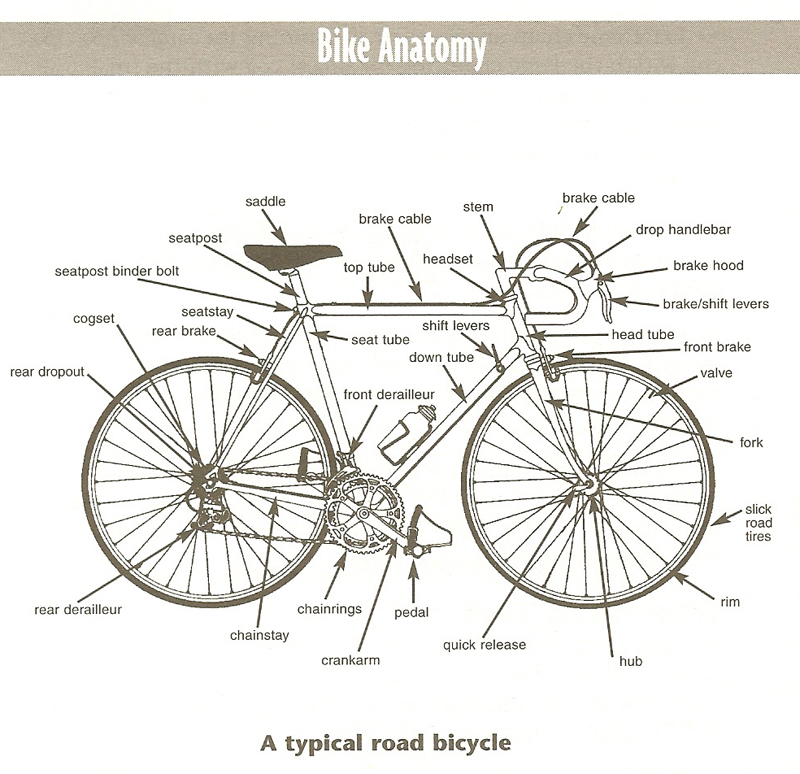
For this article, I will be referring to the bicycle frame parts labelled in the picture above. Source: Kirksville Bike Co-op, Truman State University https://bike.truman.edu/diy-learning/
A quality bicycle starts with a quality bicycle frame. The classic double-diamond bicycle frame has been around since 1880, and the photos below will show you what to look for in a quality frame.
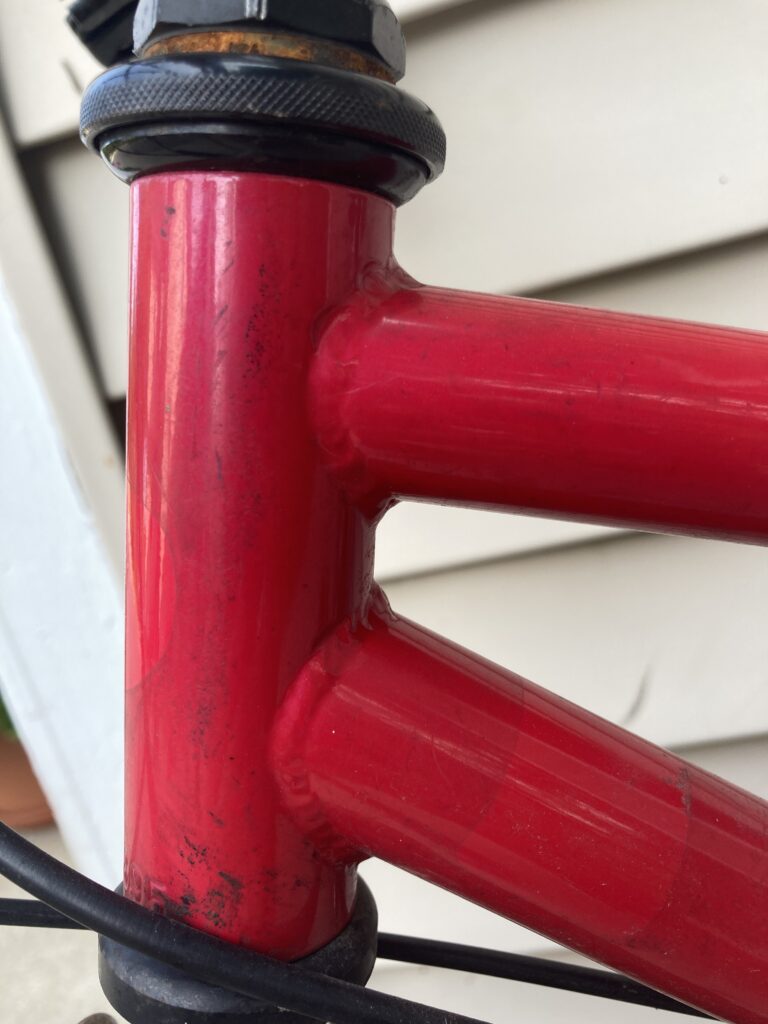
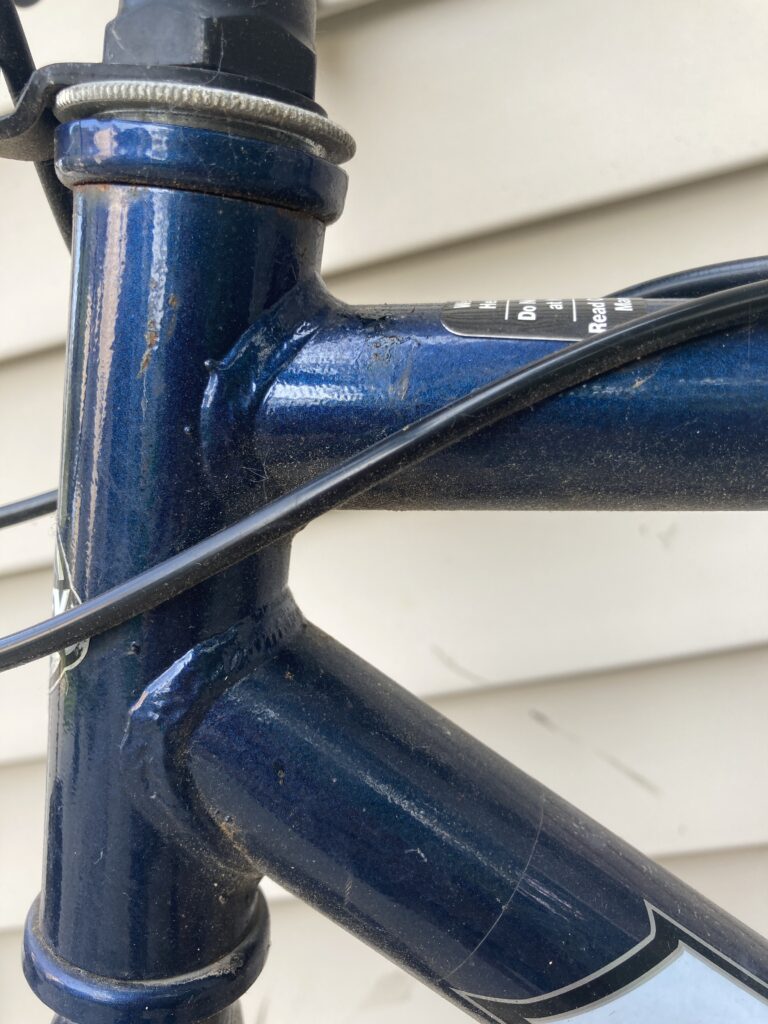
This photo above is an example of a quality head tube welding. Notice the welds are narrow, smooth and there are no gaps.
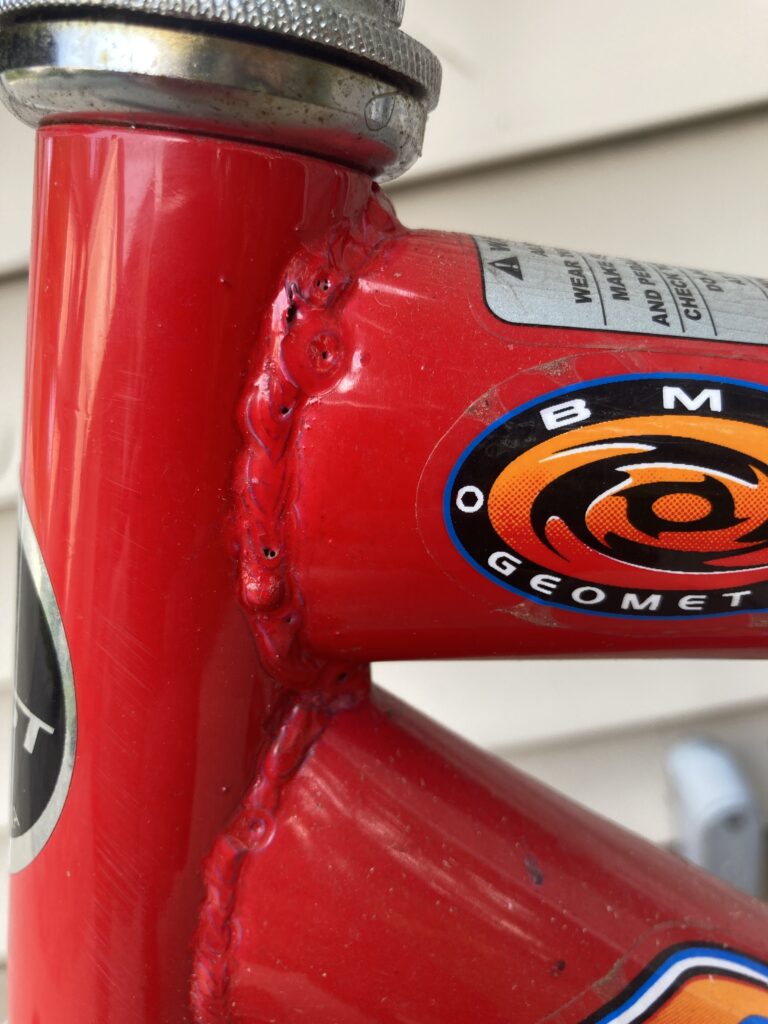
The photo above shows what the welds look like on a cheap bike. Notice the large globs, holes and rough appearance. The holes will allow rust to develop in the frame, leading to a failure at the joint.
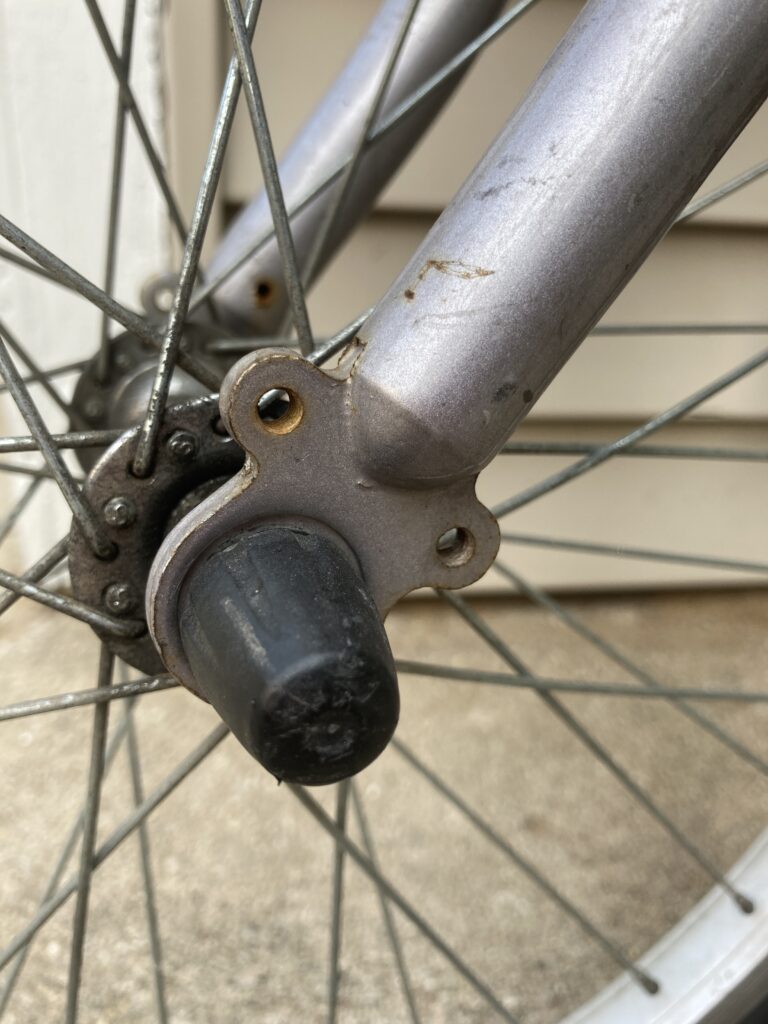
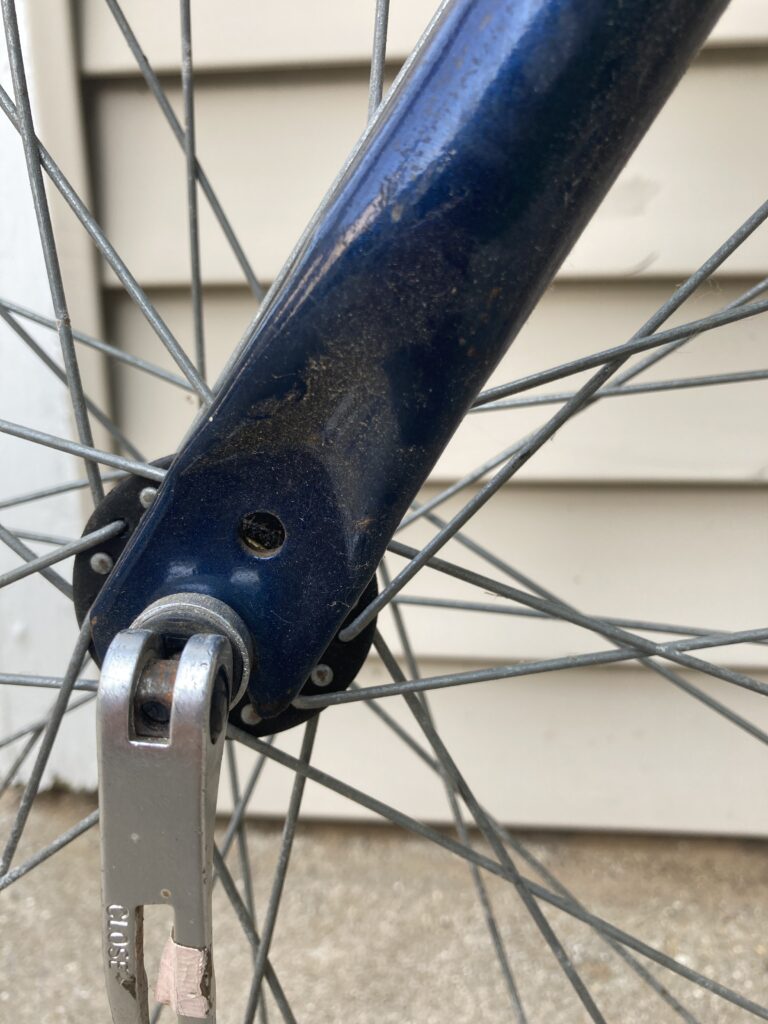
Notice how the ends of this fork are pinched to form the drop-outs. This is easier and cheaper to do at the factory. It is also not as long-lasting and weaker.
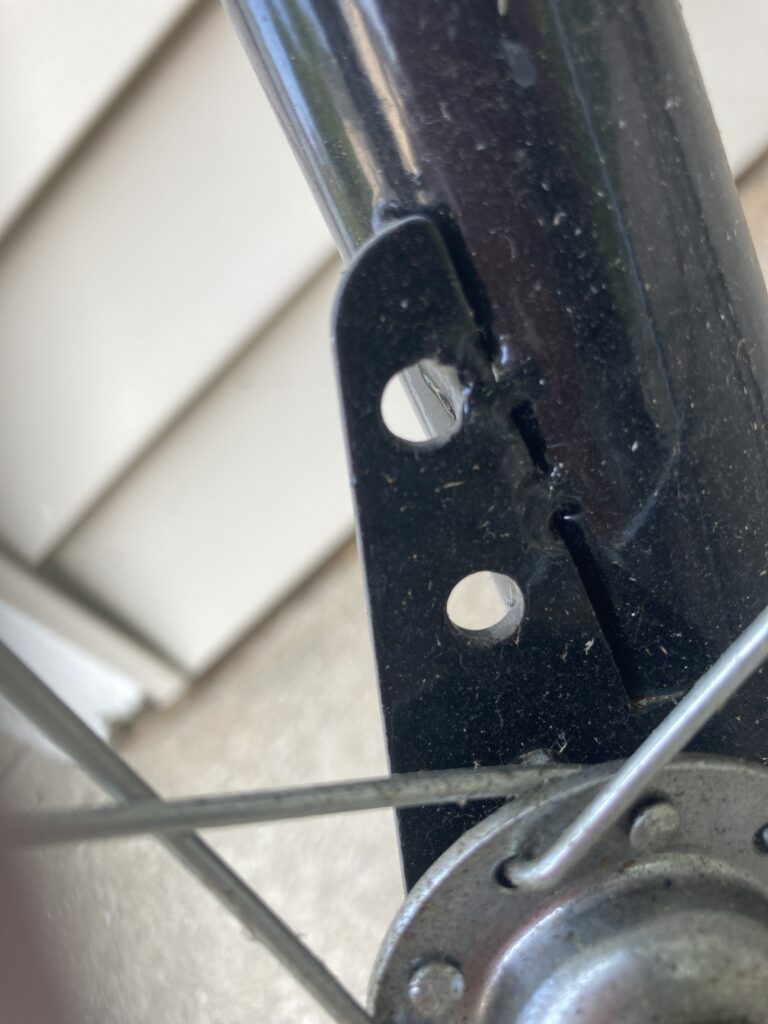
The above fork is a decent piece of work. Notice that a separate piece is welded to the fork tube. This requires more work and material in the factory, but results in a stronger, longer lasting fork.
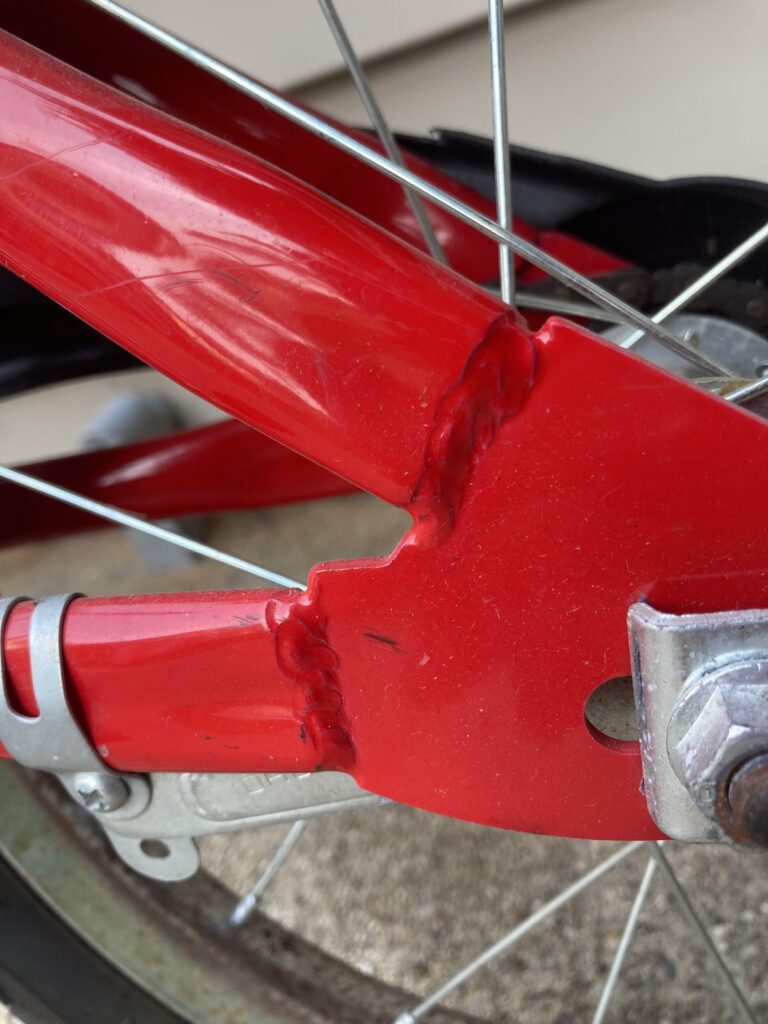
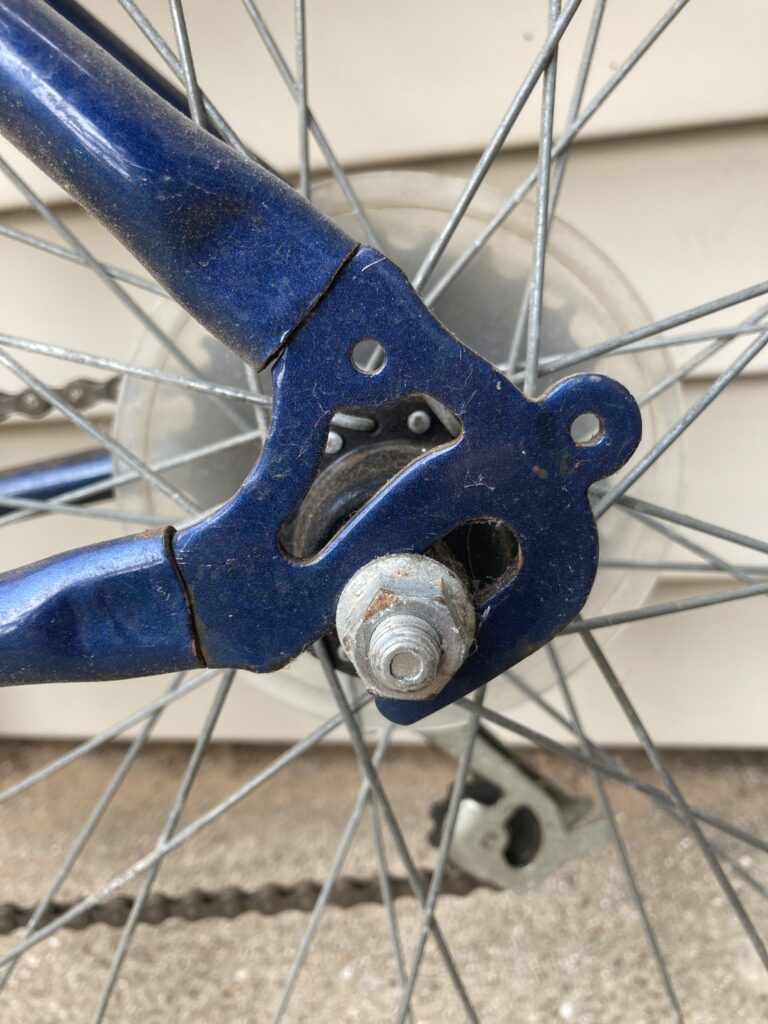
This is a very cheap drop-out. Surely the tubes were welded after they were pinched around the drop-out, but I don’t see any in this photo. Also notice the gap at the connection between the seat stay and the dropout; how the opening for the tube is larger than the tab on the dropout. Small unfinished spaces like this allow rust to form.
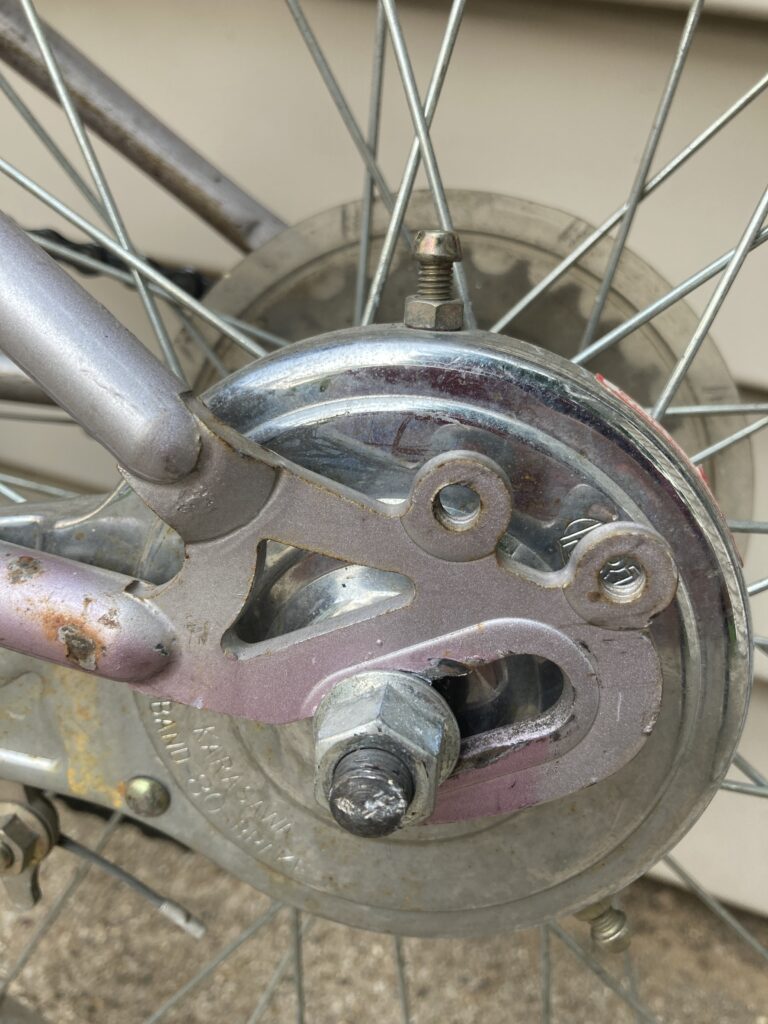
In the above photo, notice how the tubes that meet at the drop-out are not pinched. They were slotted to accept the drop-out, and the dropout and frame tubes are sized for each other. Rust has formed on this frame, but it is superficial. This particular bicycle has an uncommon drum friction brake.
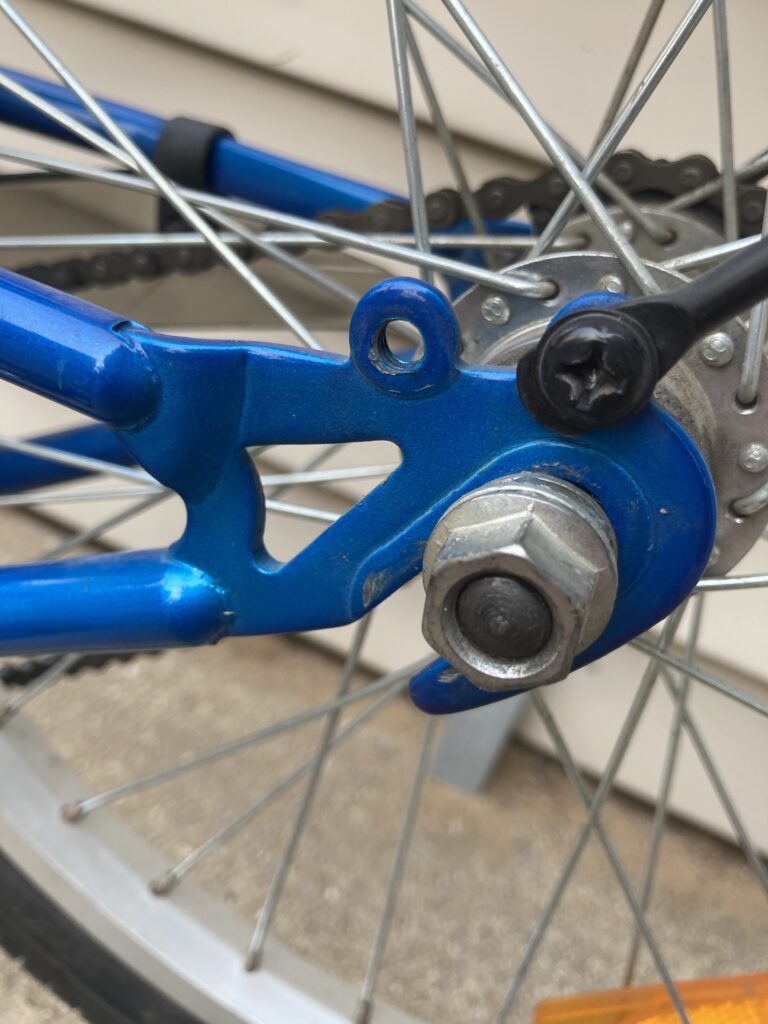
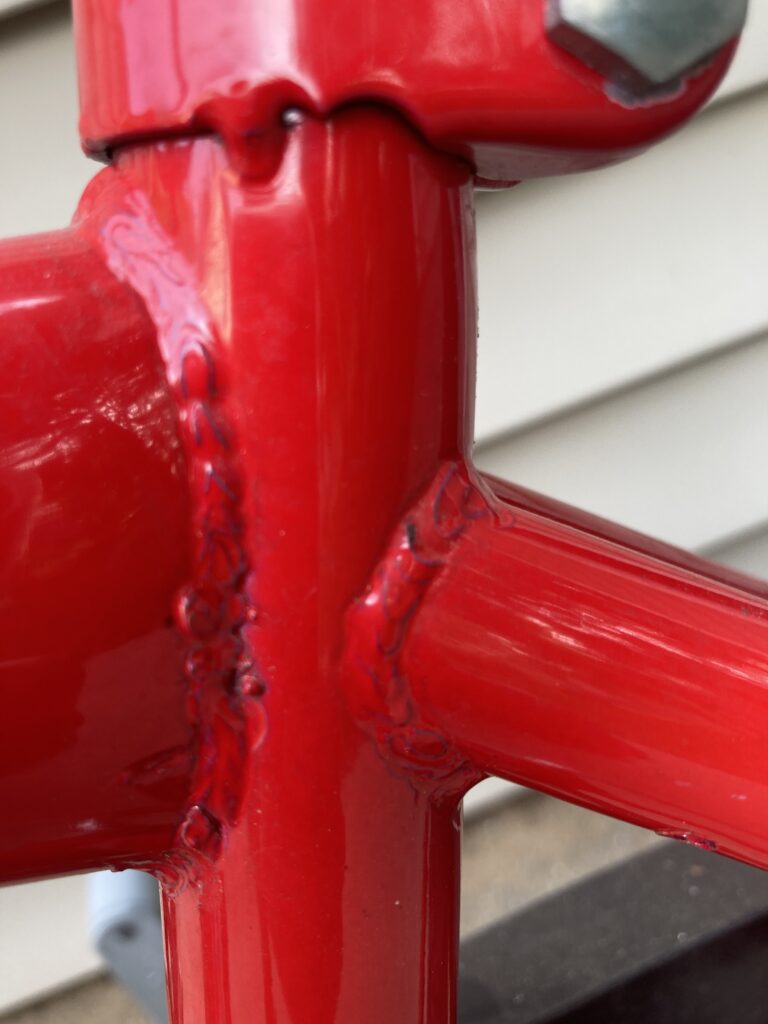
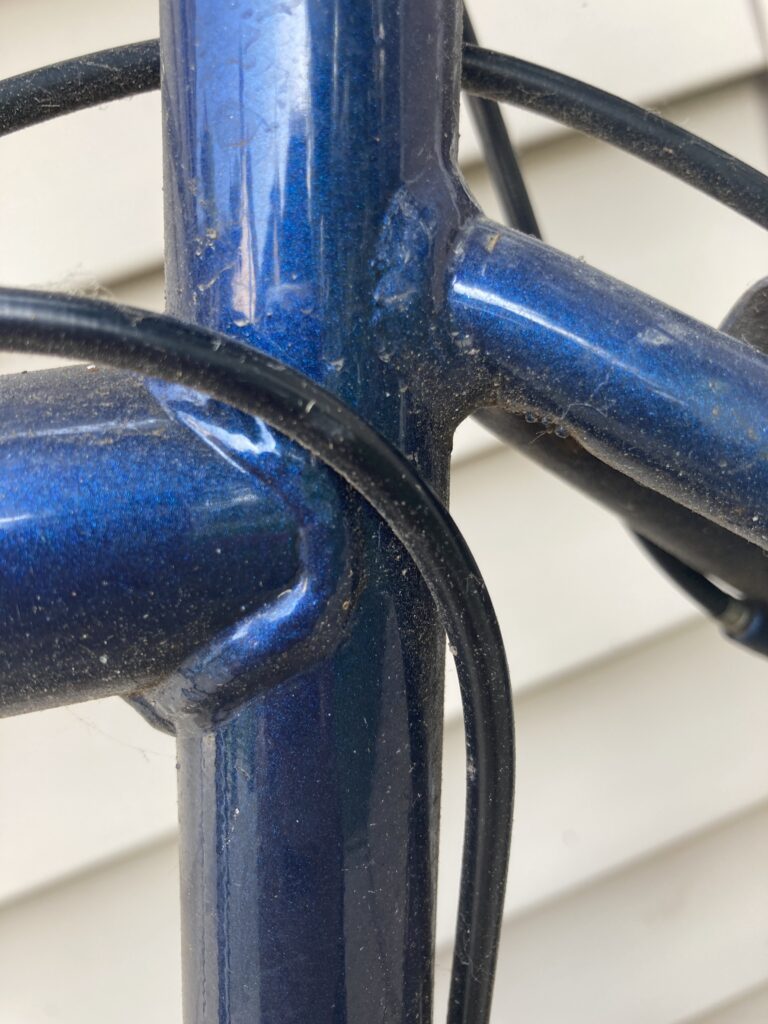
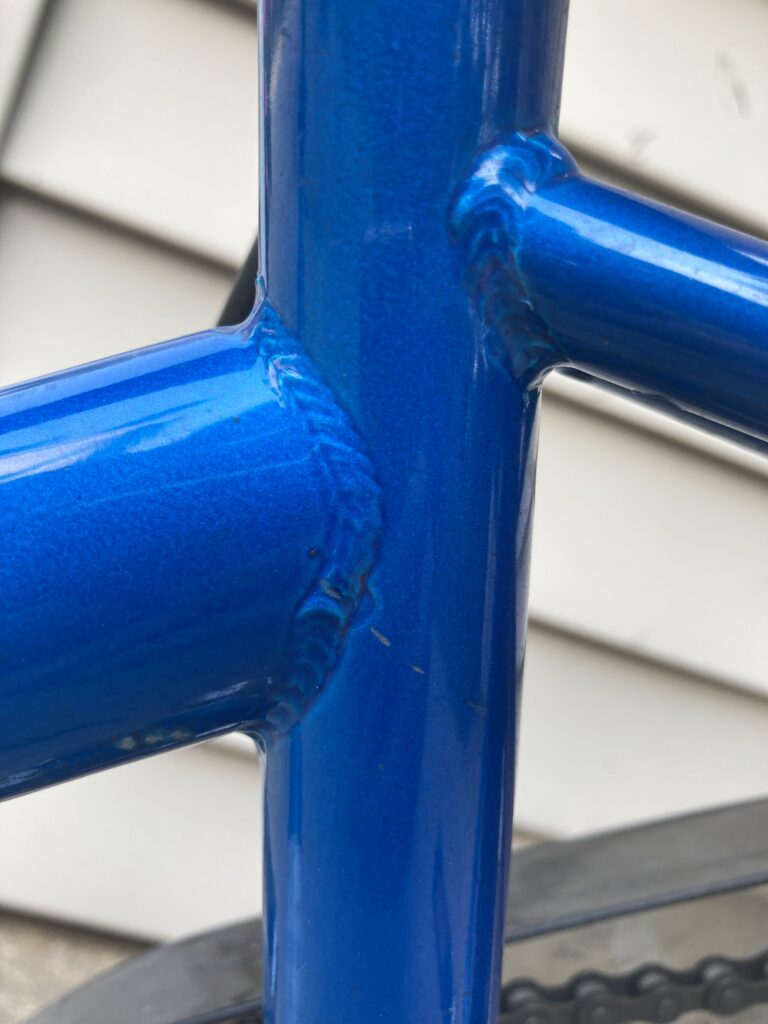
After looking at these photos, I hope you are more confident in evaluating the next bicycle you see at a garage sale or thrift store. A quality frame can last for decades with different wheels, pedals, saddles and people around it.
If you have any questions, contact me at the e-mail address above. Happy Riding!
